How do you read? What do you read? What principles of reading do you follow? A text that has guided me in my reading and study habits has been Proverbs 13:20, "
He that walketh with wise men shall be wise: but a companion of fools shall be destroyed".
Whenever I enter my library I recognize that each volume represents the voice of one or more counselors with whom I have the opportunity to converse. By taking up and reading these books I have the privilege of interacting with teachers throughout much of world history and from around the globe. Reading is a conversation and a walk with those who are knowledgeable and, hopefully, wise. I love what C. H. Spurgeon said nearly a century ago, "He who will not use the thoughts of other men's brains proves he has no brains of his own."
The kind of books I like to read are those that are practical, thought-provoking and useful (this holds true for me even when it comes to reading fiction). I especially delight in books steeped in scriptural thought and that warm my heart toward Christ and Christian obedience. I enjoy reading and most always carry a book (or two) with me wherever I go. I am not a fast reader, but I strive to be a thoughtful reader.
In his introductory essay to an English translation of Athanasius's
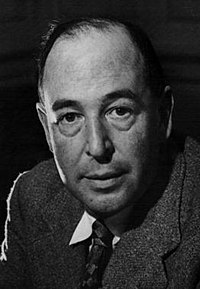
On the Incarnation, C. S. Lewis offers a classic argument for the reading of old books. Truly, this essay ought to be required reading for every Christian reader. Lewis is here addressing students/readers with regard to non-fiction, but I believe that what he has to say is valuable for all, especially those who claim to be non-readers and those who have nestled themselves in the imaginative and no-less-dangerous world of fiction.
Old or New?
Lewis's essay aims to be a corrective for those who prefer modern books over the older ones, especially in the area of theology. He attributes this aversion to an unfounded sense of humility and shyness. In essence, Lewis urges readers to face the masters and giants of the faith, embrace them, walk with them, learn from them. Lewis is so confident in this recommendation that he proclaims, "knowledge is not only more worth acquiring than secondhand knowledge, but is usually much easier and more delightful to acquire."
The preference for modern books is a grave "mistake" and "is nowhere more rampant than in theology." He writes, "Wherever you find a little study circle of Christian laity you can be almost certain that they are studying not St. Luke or St. Paul or St. Augustine or Thomas Aquinas or Hooker…but Niebuhr or Miss Sayers or even myself. Now this seems to me topsy-turvy."
Rather, Lewis continues, "if he must read only the new or only the old, I would advise him to read the old."
A new book (in any field of science and in particular theology) must be "tested against the great body of Christian thought down the ages, and its hidden implications (often unsuspected by the author himself) have to be brought to light." For similar reasons, Samuel Davies, the Father of Southern Presbyterianism, once wrote, "The venerable dead are waiting in my library to entertain me and relieve me from the nonsense of surviving mortals."
R. Kent Hughes, in his modern classic, Disciplines of a Godly Man, lays down the following charge: "Men, to deny ourselves the wealth of the accumulated saints of the centuries is to consciously embrace spiritual anorexia."
A Rule for Reading
As readers and thinkers, we need perspective. Perspective comes from breadth of reading, and so, Lewis lays down the following rule that will enrich your understanding and strengthen your reading:
It is a good rule, after reading a new book, never to allow yourself another new one till you have read an old one in between. If that is too much for you, you should at least read one old one to every three new ones.
This may seem rigid, and I do not follow this rule exactly myself, but the more I read, especially when I set out to review a book, the more clearly I understand how critical this rule is.
Two Kinds of Books
When it comes to theological reading, there are two broad categories: devotional and doctrinal. There is a place for both kinds, but I agree wholeheartedly with Lewis who writes:
For my own part I tend to find the doctrinal books often more helpful in devotion than the devotional books, and I rather suspect that the same experience may await many others. I believe that many who find that "nothing happens" when they sit down, or kneel down, to a book of devotion, would find that the heart sings unbidden while they are working their way through a tough bit of theology with a pipe in their teeth and a pencil in their hand.
…or a cup of hot coffee or tea; and, YES, a thoughtful reader is an active note-taker. Fill the margins as you converse with a book. Resist the urge to remain passive and silent!
D. Martyn Lloyd-Jones shared some harsh criticism of 'devotional'commentaries in his book Preaching and Preachers:
I abominate 'devotional' commentaries. I do not want other people to do my devotions for me; yet I cannot think of a better term here. I am thinking of a type of reading which will help you in general to understand and enjoy Scriptures, and to prepare you for the pulpit. This type of reading comes next to the Scriptures. What is it? I would not hesitate to put into this category the reading of the Puritans. That is precisely what they do for us. Those men were preachers, they were practical, experimental preachers, who had a great pastoral interest and care for the people. So as you read them you find that they not only give knowledge and information, they at the same time do something to you. (174-5)
How to Read Profitably
I recently found another essay by the Puritan pastor, Thomas Brooks, which offers excellent advice for reading profitably. In his "A Word to the Reader" prefaced to his treatise Precious Remedies Against Satan's Devices, Brooks writes:
Solomon bids us buy the truth (Prov. 23:23), but doth not tell us what it must cost, because we must get it though it be never so dear. Remember, it is not hasty reading, but serious meditation upon holy and heavenly truths, that makes them prove sweet and profitable to the soul. It is not the bee's touching of the flower that gathers honey, but her abiding for a time upon the flower that draws out the sweet. It is not he that reads most, but he that meditates most, that will prove the choicest, sweetest, wisest, and strongest Christian. &c. Reader, if it be not strong upon thy heart to practice what thou readest, to what end dost thou read?
It is this art of meditation that has been lost upon many readers, and the Puritan authors are among some of the best guides.
A couple of months ago, I was asked to recommend to my home church two or three books that have greatly influenced my life. A number of books recently read came to mind, but as Lewis has so ably taught us, some of these contemporary books still need a bit more time to steep. Rather, it has been some of the older books that have made the most enduring impression upon my life and thinking. In the next few posts I would like to introduce to you the books I recommended in my talk. I have mentioned most of these titles on the blog in previous posts, but I am convinced that they are well worth the repetition.

Thoughts on Christian Reading


 (Oxford University Press, 2008) and of The Narnia Code
 (Tyndale, 2010), recommends five (5) books on the life and writings of C. S. Lewis.
C. S. Lewis combined abilities to look backward and forward in unusual measure. Most of his readers know he was a literary critic, but he spent little time reviewing authors among his contemporaries. He was, instead, a literary historian, an explorer particularly of medieval and Renaissance literature. He thus was committed to the importance of history to provide us not only with more or less interesting accounts of the past to satisfy our curiosity but also with an accurate understanding of how we got here‒and what "here" actually is. Lewis is, as usual, eloquent on his theme:
 . Oxford: University Press, 2008, pp. 71-72.
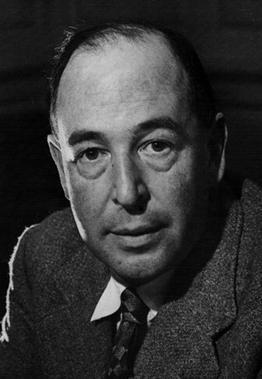 On this day in 1963, the same day that President John F. Kennedy was shot, famed professor and author Clive Staples Lewis went home to be with the Lord. He had lost his wife, Joy Gresham, to cancer a few years earlier; then his own health began to fail, leading to his resignation from Cambridge three months before his death. A sad ending to a brilliant life? Yes, if that really is the end. However, Lewis revealed a belief in something beyond this world.