Showing posts with label J. C. Ryle. Show all posts

Saturday, May 10, 2008

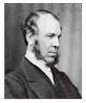
Evangelical Bishop J.C. Ryle

Fifty years ago the Christian church was just beginning to rediscover J.C. Ryle, who was a respected Church of England clergyman in the 19th century. A strong evangelical leader, he was known for his biblical convictions and expository preaching. In addition he wrote over 30 books and tracts promoting and defending the historic Christian faith, having been influenced by the Reformation and the Thirty-nine Articles of the Church of England. In the first half of the 20th century, however, most of his books went out of print, and he was unknown by many until his book Holiness was reprinted by James Clarke & Co. in 1952.
John Charles Ryle was born in Macclesfield, England on May 10, 1816 and educated at Eton and Christ Church, Oxford. He was the son of a wealthy banker and was expected to take over his father's business someday, having turned down careers in politics and teaching. His family was nominally Christian with no real dedication to the Lord. As a young man Ryle concluded that "Christianity must be one of the most disagreeable occupations on earth, or in heaven" (Peter Toon and Michael Smout, John Charles Ryle: Evangelical Bishop, Reiner Publications, 1976, p.24).
About two years before his conversion Ryle was out shooting with a college friend and was rebuked for swearing by his friend's father, who was a Christian. He never forgot this experience with someone who really knew the Lord. In the summer of 1837, having completed examinations and suffering illness, Ryle attended a church service, where he heard Ephesians chapter two being read by someone whose name he never knew. When the speaker came to verse eight, "By grace are ye saved through faith; and that not of yourselves: it is the gift of God," he laid great emphasis on each phrase; and the truth of God's Word concerning justification by faith alone gripped Ryle in the same way that it took hold of Martin Luther centuries earlier. J.C. Ryle was soundly converted, never to be the same again.
Ryle's career in banking came to an abrupt end with the collapse of his father's business in 1841. The family had to sell their property and most of their possessions and move to different places. Had it not been for the Lord, Ryle might have committed suicide during this dark time. But his adversity drove him to the Scriptures for answers. "Faced with the opposition of circumstance at every turn, Ryle learnt that 'submission to God's will is perfectly compatible with intense and keen suffering under the chastisement of His will'" (Toon and Smout, p. 32). He then began thinking seriously about entering the ministry. Ryle was ordained in December 1841 and began 39 years of ministry to country churches until Prime Minister Benjamin Disraeli recommended him as the first bishop of Liverpool in 1880, a position he held until three months before his death on June 10, 1900.
The evangelical bishop never lacked for critics among liberals and anglo-catholics, but he also never lacked courage to face them with the truth of God's Word through his sermons, books, and tracts. As a preacher Ryle was plain-spoken and warm-hearted; as an author he was prolific. Whether preaching or writing, he faithfully and forcefully expounded the Bible. His books include Christian Leaders of the 18th Century, The Upper Room, Five English Reformers, and his edifying series of Expository Thoughts on the Gospels.
His book Holiness, originally published in 1877, was written to meet needs he saw among Anglican Christians. The first edition consisted of only the introduction and first seven chapters. The book was so well received that two years later he expanded it into the form we have now. In his preface to the 1952 reprint of Holiness Dr. D. Martyn Lloyd-Jones says, "Ryle, like his great masters, has no easy way to holiness to offer us, and no 'patent' method by which it can be attained; but he invariably produces that 'hunger and thirst after righteousness' which is the only indispensable condition to being 'filled.'"
May the Lord give us today this hunger and thirst for Himself through faithful expositors of His Word.
——————————————
For further reading:
Peter Toon and Michael Smout, John Charles Ryle: Evangelical Bishop (Swengel, PA: Reiner Publications; Cambridge: J. Clarke, 1976). Read online.
J.I. Packer, Faithfulness and Holiness: The Witness of J.C. Ryle (Crossway Books, 2002)

Share/Bookmark

Friday, November 16, 2007

J. C. Ryle's Expository Thoughts on the Gospels | This Weedend at CBD

Check out Fabulous Friday at Christianbook.com!

This is a set that I highly recommend and it is at a great price (and hardcover!).

Expository Thoughts on the Gospels, 4 Volumes
J.C. Ryle
Baker Books (June 1, 2007)
Retail Price: $250.00
CBD Price: $27.99

Up until this past June these commentaries have been available in paperback from Banner of Truth. I'm glad to see these reprinted in hardback.
Share/Bookmark

Thursday, May 10, 2007

What do J. C. Ryle and Karl Barth have in common?

So what do the first Anglican Bishop of Liverpool and the "Father of neo-reformation theology" have in common? They share the same birthday, May 10. John Charles Ryle was born in 1816 and Karl Barth was born in 1886.

I nearly missed the fact that today is the birthday of these two significant figures in Church history. I must offer a HT to Ben Myers, of Faith and Theology, for referencing the following post by Dr Jim West:

It’s well enough known, isn’t it, that May 10th is Karl Barth’s birthday. It’s also well enough known that he stole the stage in the 30’s and 40’s with his fiery socialism / Calvinism (a strange combination indeed). It’s also well enough known that Barth was a fan of Mozart and began his day with a recording of some piece from Mozart and a coffee along with the newspaper.

It may not be well enough known, though, that the young Barth (from 1919-1931) was at his best, his brightest, and his most insightful. It was during those years that he lectured at Göttingen and Münster and other places as well. At Göttingen he gave his rightly famous lectures on Dogmatics (the only Dogmatics he ever completed! Yes, it includes Barth’s eschatology!!!!); and it was there too that he lectured on Zwingli and Calvin and Schleiermacher. Barth did his best work those years. (read more here)

I can't say that I am a fan of Barth. I really am no expert on him. I've only read a short biography and introduction to his works: Barth for Armchair Theologians by John R. Franke. I've also begun reading Karl Barth, by David L. Mueller in the Makers of the Modern Theological Mind series. I've learned some, but still have a long way to go. I've not even touched Barth's Church Dogmatics.

BARTH, KARL (1886-1968), Swiss theologian and founder of the dialectical or neo-orthodox school. Born in Basel. Educated in Berne, Berlin, Tübungen [sic], and Marburg. Liberal pastor of two Swiss churches from 1909 to 1921. Horrors of World War I and his study of Kierkegaard, Calvin, and the Bible shattered his liberal optimism and led to the formulation of his crisis theology, first set forth in his Römerbrief in 1919. Professor at Göttingen, Münster, and Bonn from 1921 to 1935 and at Basel from 1935 to 1962. His ideas are set froth in the Barmen Declaration, which he mainly wrote in 1934 for the Confessional church against Nazism and in his multivolume Church Dogmatics. He pictures God as transcendent, sovereign, and outside history with basic discontinuity of sin separating man and God. Man can only relate to God in a spiritual crisis when the Holy Spirit uses the Bible to relate man to God through Christ. Universalism seems inherent in his system. He was opposed to natural revelation and clashed with Brunner on this point. Thus neo-orthodoxy from 1930 to about 1950 replaced the earlier naive Liberalism. [From the Wycliffe Biographical Dictionary of the Church. Edited byElgin Moyer, revised and enlarged by Earle E. Cairns. (Chicago: Moody Press, 1981.) p. 30.]

Ben Myers has done some writing on Karl Barth, here.

I've profited greatly from the writing J. C. Ryle. His Expository Thoughts on the Gospels and Holiness: Its Nature, Hindrances, Difficulties, and Roots are "must have" volumes for every preacher's library.

RYLE, JOHN CHARLES (1816-1900), Low church Anglican bishop, born near Macclesfield, Cheshire, England, studied at Eton and at Christ Church, Oxford. After college ordained in 1842, pastored several lesser known churches, then in 1871 made honorary dean of Norwich. In 1880 nominated by Lord Beaconsfield as dean of Salisbury. Before he had taken office he was made the first bishop of the newly organized diocese of Liverpool where he served until his death. Wrote more than one hundred tracts and pamphlets on doctrinal and practical subjects which enjoyed a wide circulation in English and foreign languages. Published a number of books of sermons and devotional literature. Among published books are: Christian Leaders of the Last Century; The Bishop, the Pastor and the Preacher; Is All Scripture Inspired?; Expository Thoughts on the Gospels (seven volumes); Light from Old Times; Hymns for the Church on Earth; Knots Untied; Lessons from English Church History; and What Do We Owe to the Reformation? Thoroughly evangelical in doctrine; one of the most prominent members of the evangelical party. [From the Wycliffe Biographical Dictionary of the Church. Edited byElgin Moyer, revised and enlarged by Earle E. Cairns. (Chicago: Moody Press, 1981.) p. 354.]

Other writings:

Biography of J. C. Ryle: That Man of Granite With the Heart of a Child

J. C. Ryle on the web:
J. C. Ryle Page
Wikipedia
Christian Classics Ethereal Library

I apologize that this was so late, but I wanted to capture the opportunity to highlight this birthday in some way.
Share/Bookmark