Showing posts with label Karl Barth. Show all posts

Friday, August 13, 2010

The Idolatry of Concepts - Rikki Watts

I am using Rikki Watts' book Isaiah's New Exodus in Mark along with a few other commentaries (see them all in the sidebar) as I study and preach through the Gospel of Mark.  I've found a tremendous amount of help from Watts and highly recommend this work to you next time you dig into the Gospel of Mark.

Yesterday, I saw the following article highlighted by Jon Rising on his blog, Word & Spirit, which recounts the highlights of a recent lecture Watts gave at St. Andrew’s Cathedral in Singapore (flyer here).  This article was timely for me and I don't want to miss noting it here. (I checked for audio of this lecture, but found none.)

Emond Chua, "Theologian:  Bible About God's Character, Not Concepts".

I agree with Jon. This article "is well worth reading."  Three thoughts stood out to me as I read this article.

First,
Aggression by supposed Christians is really due to an "idolatry" of concepts...

“If you think it’s all about concepts, don’t be surprised if we treat people bad over concepts,” said Watts... “People in the name of truth will treat people badly.”
This is a hard saying, indeed.  Thinking of my own experiences and context, I must admit that maintaining a balance between standing for truth and upholding mercy towards real people is an enormous challenge.  Over the past couple of years, the Lord has placed me in positions where I've been helped to grow in this area more than ever before.  I'm very thankful for the reminder and challenge given by Watts at this point.

Second,
Watts gave the example of a chess game. Scientific observation of a chess game may lead to some understanding of the way the game is played. But it cannot differentiate between the friendly game played by a couple and the competitive one played by opponents. Just like that, theology has become an “elite exercise that doesn’t change lives,” he pointed out. (emphasis mine)
This statement coincides with the theme of Part II: Theological Existence in Karl Barth's Evangelical Theology: An Introduction (Eerdmans, 1986 [1963]) which I have been reading this week.  Please don't start firing darts at me because I'm reading Barth (re-read my First point above).  I'm reading Barth for academic reasons, but this second section aims at the heart of the theologian.  In his chapter on "Concern," Barth writes, "When a man becomes involved in theological science, its object does not allow him to set himself apart from it or to claim independence and autarchic self-sufficiency" (p. 75).  In other words, theology has ceased to be theology when it becomes an "elite exercise," to use Watts' phrase.  Barth goes on to say "There may be great lawyers, doctors, natural scientists, historians, and philosophers.  But there are none other than little theologians, a fact that, incidentally, is fundamental to the 'existentials' of theology" (p. 77).  I appreciated this humility coming from one who is lauded, certainly to his own chagrin, as a "Great" theologian.

Later on in this same chapter Barth tells a story of Professor Tholuck of Halle who sought to challenge the hearts of his students.
The story is told that the once famous Professor Tholuck of Halle used to visit the rooms of his students and press them with the question, "Brother, how are things in your heart?" How do things stand with you yourself?—not with your ears, not with your head, not with your forensic ability, not with your industriousness (although all that is also appropriate to being a theologian). In biblical terms the question is precisely, "How are things with your heart?" It is a question very properly addressed to every young and old theologian! (p. 83, emphasis mine)
Third, and finally, Mr. Chua notes that Watts landed his discussion of the "idolatry" of concepts with a contrast between concepts and character.  One concept that is paramount to Christians is that of holiness.  Can it be that the pursuit of holiness can lead to a form of idolatry?  This is what Watts proposes.
Holiness is not about being good, the professor pointed out. An excessive emphasis on goodness can actually bring death to people. It can make demons of its proponents. “I think holiness has to do with whether my life brings the life of God to other people,” he said. That was how the early church won over the ancient Roman world, the scholar added.
All of these statements, I believe, come from Watts' first lecture  in his two-part series, God's Faithful Character: Understanding the NT Use of the OT with Special Focus on Mark.
Lecture 1 is, God's Faithful PromiseIsaiah's Saving Light to the Nations and Malachi's Warning to Israel.

Lecture 2 is God's Faithful Presence—Jesus as Messiah, Servant, Son of Man...and the Lord Himself.
Watts also lectured on the Gospel of Mark.  Here is the series:
Making a Difference — Being Disciples of a DIFFERENT Kind of God: Studies from the Gospel of Mark
  1.  A Call to Discipleship: Making Sense of the First Gospel
  2. Who is This? Mark's Astonishing Picture of the Jesus We Follow
  3. The Heart of Discipleship: A New Humanity for a New Creation
If anyone finds a link to these lectures in audio format, please let me know.  I'd love to listen to them!  I should also add, that Rikk Watts is slated to write a new commentary on the Gospel of Mark for the NICNT series which will replace that of William Lane.
Share/Bookmark

Monday, December 15, 2008

Free Access to the Alexander Street Press Religion Collections (for December)

A couple of days ago, I highlighted the Alexander Street Press Digital Library of Classic Protestant Texts. Prior to that I highlighted the Digital Karl Barth Library. These are wonderful tools, and I want to make sure that none of you miss the following offer to search them for free over the Christmas holiday. Here are links to the collections along with a username and password (good through the month of December!):

COLLECTIONS:
The Digital Library of Classic Protestant Texts


The Digital Library of the Catholic Reformation


Digital Karl Barth Library


USERNAME: reviewer
PASSWORD: 46waylaid72


THANK YOU!!!
Share/Bookmark

Saturday, December 13, 2008

Lloyd-Jones on Barth's Morning Pick-Me-Up

Something Jason said about Mozart in his post on The Digital Karl Barth Library reminded me of a comment Martyn Lloyd-Jones made on the benefit of music to ministers starting their day of studying. Lloyd-Jones is dealing with the preparation of the preacher before the preparation of the sermon. In this discussion he uses Barth's delight in Mozart as an illustration.
Someone recently said to me that he was astonished when reading the obituary notices at the time of the death of Karl Barth to find that Barth used to start the morning by listening to a record of music by Mozart. He said that he could not understand this. I said, 'What is your difficulty?' 'Well,' he replied, 'I am surprised that a thinker like Karl Barth went to Mozart; I would have expected him to go to Beethoven or Wagner or perhaps Bach.' He was astonished. My feeling about this man was that he evidently did not know the real value of music, or how to use it. 'I can tell you why Karl Barth went to Mozart' I said, 'He did not go to him for thoughts or ideas, he went to Mozart because Mozart did something to him in a general sense. Mozart put him into a good mood, and made him feel happy in his spirit. He released him, and set him free to do his own thinking.' A general stimulus in that way is often more helpful than a more particular intellectual one. The man himself is bigger than his intellect. Is not that the reason why the prophets of old had music played to them on the harp or some other instrument? . . . Anything that does you good, puts you into a good mood or condition, anything that pleases you or releases tensions and relaxes you is of inestimable value. Music does this to some in a wonderful way. . . . So put on your gramophone record, or whatever it is -- anything you know that will help you.
(Preaching and Preachers, Grand Rapids: Zondervan Publishing House, 1972. p. 183)

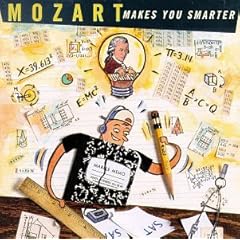
Maybe it really is true that Mozart Makes You Smarter. I love Mozart, so I'm holding out hope.
Share/Bookmark

Friday, December 12, 2008

Trial Access to The Digital Karl Barth Library

For those of you not following the comments, I would like to highlight the following note from Alexander Street Press:
To commemorate the anniversary of his passing, we are offering scholarly access to The Digital Karl Barth Library from now through the end of the year. If any of your readers would like to access it, they may do so at this URL:
http://alexanderstreet.com/dkbl_trial.htm

Sincerely,
Meg Keller
Alexander Street Press

Meg, thank you for the offer. The site looks great and easy to manage.

I also noticed that this website includes a Classical Music Library with is offering a free download of the week: Mozart's Serenade No. 11 in E flat, K. 375. Mozart was Barth favorite composer, and he states that he began each morning by listening to Mozart. Barth writes of Mozart, "he has produced in almost every bar he conceived and composed a type of music for which 'beautiful' is not a fitting epithet" (§ 50 God and Nothingness. In CD Volume III/3, 297). Many thanks!
Share/Bookmark

Thursday, December 11, 2008

Karl Barth, Forty Years Later

The title of this post is borrowed from the T&T Clark blog which posted a brief tribute to Barth yesterday.

Earlier this year, T&T Clark published a revised edition of Karl Barth's Church Dogmatics (see an announcement here). The newly revised and digitized edition is the result of a close co-operation between Princeton Theological Seminary and T&T Clark Publishers.

The new version of the Church Dogmatics will be made available in three ways:

1. A fully searchable CD-ROM version from Logos Bible Software, available from April 2008.

2. As part of the Digital Karl Barth Library in German and English from Alexander Street Press.

3. A new paperback print edition in 31 volumes, presenting the text in a new layout, incorporating the translations of Greek and Latin texts in a student-friendly format, available from December 2008 through T&T Clark at an introductory price of $750/£449 (also available as ebook). [This set is due to be available in the US by mid February, 2009. Amazon (currently $648.78) | CBD (currently $425.00)]

I do not consider myself to be a Barthian, Neo-Barthian, or anything of the stripe, yet I enjoy reading about prominent figures from church history; so, herein lies my fundamental interest in Karl Barth. Shortly after I began directing book review, two years ago, I request a copy of Barth for Armchair Theologians from Westminster Jonn Knox Press. I quickly read this book, but sat on it, not quite sure of what to say about it. I thoroughly enjoyed the book, finding it to be the an excellent read for someone who knows next to nothing about Karl Barth, like me. However, I feared that my readers would either be disinterested or offended simply because the subject was Barth.

Well, I hate that I have sat on this for so long because I am truly grateful for the generosity of WJK Press for sending me this review copy. At that, I nearly missed a great opportunity to mention this book. December 10th was the 40th anniversary of the passing of Karl Barth.

Karl Barth was born in the Swiss city of Basel on May 10, 1886 and died in Basel on December 10, 1968.
Barth for Armchair Theologians (WJK, 2006) is the seventh installment in WJK's Armchair Series. Each volume is illustrated by Ron Hill who adds energy, movement, and a lot of good-natured humor. These illustrations made this book even that much more enjoyable to read.

John R. Franke, professor of Theology at Biblical Theological Seminary in Hatfield, PA, offers a very readable and informative introduction to the life of Karl Barth; intermixed with ample contextual material describing the social, political, and theological backdrop of his life; along with an introduction to his major writings; and a statement regarding his legacy. Regarding Barth's life, Franke chronicles Barth's conservative upbringing, his interest in the scholasticism of the liberal schools, his pastoral ministry, his early commitment to theological liberalism, his move toward religious socialism, his subsequent departure and rejection of theological liberalism, and his attempt to pave a "new" way between conservatism and liberalism.

The journey is fascinating and extremely informative. John Franke is an excellent guide. What I found to be most informative was, first, Barth's humility--at least in this sense:

Barth was always somewhat amused by the amount of extended and detailed attention his theology received, as though its study and contemplation could be viewed as an end in itself.

"The angels laugh at old Karl. They laugh at him because he tries to grasp the truth about God in a book of Dogmatics. They laugh at the fact that volume follows volume and each is thicker than the previous one. As they laugh, they say to one another, 'Look! Here he comes now with his little pushcart full of volumes of the Dogmatics!'--and they laugh about the men who write so much about Karl Barth instead of writing about the things he is trying to write about. Truly, the angels laugh." (Karl Barth, quoted in Barth for Armchair Theologians, 165-66)
Second, reading this book provided me with a clearer backdrop, not only to Barth's theology, but also to the theology of many contemporary writers. Many evangelicals are quoting Barth frequently in there works. For instance, the renewal of Trinitarian studies is indebted to Karl Barth, and if you read very far into the literature you will surely be brought into contact with him. In his recently published, The Renewal of Trinitarian Theology, Roderick Leupp argues that "Barth (1886-1968) is the chief instigator of and inspiration for today's trinitarian renewal, at least among Protestant theologians" (p. 29). Also, many evangelicals are espousing theological viewpoints that are Barthian at heart, yet they do not necessarily disclose this fact. Gaining a better understanding of Barth and his theology is helping me to be able to identify when this is happening.

Sure, Franke appears to be sympathetic to Barth and his theology, however, I came away from the book informed without sensing any pressure to conform. As I have already mentioned, I thoroughly enjoyed reading this book and recommend it to those seeking a simple, informative, and enjoyable introduction to the life and writings of Karl Barth.

In Closing -
Yesterday, Reformation 21, the online magazine of the Alliance of Confessing Evangelicals, posted a very helpful article, "Comments on Karl Barth, Bruce McCormack, and the Neo-Barthian View of Scripture" by William B. Evans (Erskine College, Due West, SC). In this article, Evans critiques the current revival of interest in the theology of Karl Barth. His conclusion is very perceptive:

I am also struck by the parallel to Friedrich Schleiermacher--a comment that will probably surprise those who hold to the conventional view of Barth as an implacable opponent of the "father of liberal theology." In the mid-nineteenth-century context Schleiermacher was trumpeted as a bridge from the barren rationalism of Kant to orthodoxy. The church historian Philip Schaff, for example, argued in this fashion (see his Germany: Its Universities, Theology, and Religion [Philadelphia: Lindsay and Blakiston, 1857], 320). But bridges can be crossed in both directions, and while initially the preponderance of traffic over die Schleiermacherbrücke was toward more conservative forms of theology, the long-term story has been quite the opposite. I sense that the same is and will continue to be true of Barth.

Armchair Series

Share/Bookmark

Friday, May 30, 2008

Trueman on Reading Barth

Carl Trueman has some interesting pointers on reading Barth. I'm still learning about Barth and this past year has been the first time I've ever read anything by or about him. It is a challenge and I enjoy challenges. If you are unfamiliar with Barth, I think that these comments will be helpful to you.

Read this article: Barth (posted by Carl Trueman)
Followed up by: More on KB

HT: Sean Michael Lucas
**Sean Lucas has his own post on Barth (Karl Barth, Evangelicals, and Dealing with Others) which struck up an interesting series of comments which may also be worth your time--if you are interested in learning more about Barth and Evangelical/Fundamentalist responses to his theology.

I've listened to Van Til's lectures on Barth and was helped by them. You can find them at the following locations:
Finally, the first book I read about Karl Barth is the volume on his life and theology in the Armchair Theologian series by WJK Press.

Franke, John R. Barth for Armchair Theologians. Illustrated by Ron Hill. WJK Press, 2006. Paperback, 192 pages.

This is an enjoyable, easy-to-read biography/introduction to the thought and writings of Karl Barth. I appreciated it most because I enjoy studying church history, and this was written with this sort of a reader in mind. Franke does a fine job simplifying the story of Barth from early childhood to his brief pastorate to his career as a professor of theology. In introducing the works of Barth, Franke continues to keep it simple because there "frankly" isn't enough room in the volume to deal with anything in length. However, he surveys some of the most helpful works that deal with Barth's writings, especially the massive CD. Comparing this work to some of the other biographies of Barth that I have, this is an ideal place for a beginner to start.

Ben Meyers (Faith & Theology) reviewed this book here: John Franke: Barth for armchair theologians
Share/Bookmark

Thursday, February 14, 2008

The Simplicity of God & Man's Praise

Lately, I've been doing a bit of reading in modern theology. In an attempt to get a better handle on Karl Barth I picked up my copy Church Dogmatics: A Selection (translated by G. W. Bromiley) hoping to get a quick sampling of his writing. Last night I came across the following statement on the simplicity of God, and I had to stop and wonder at the glory of God (this is, by no means, a blanket endorsement of Barth's theology, just something I think he put well). Barth writes...
God Himself is simple, so simple that in all His glory He can be near to the simplest perception and also laugh at the most profound or acute thinking--so simple that He reduces everyone to silence, and then allows and requires everyone to make Him the object of their thoughts and speech. (p. 36)
This thought caught my attention because it reminded me of a similar lesson I learned while studying the Praise Psalms for a recent Sunday School series. As I was reading and studying the Praise Psalms I picked up a copy of C. S. Lewis' Reflections on the Psalms. Lewis wondered at the fact that we are commanded to praise the LORD.

The Preacher in Ecclesiastes 5:1 cautions against hastiness in speaking before God.
Be not rash with your mouth, nor let your heart be hasty to utter a word before God, for God is in heaven and you are on earth. Therefore let your words be few. (ESV)
However, praise is unrestrained in the Psalter.
Psalm 9:1-2
1 I will give thanks to the Lord with my whole heart;
I will recount all of your wonderful deeds.
2 I will be glad and exult in you;
I will sing praise to your name, O Most High. (ESV)
Praise is required of all creatures.
Psalm 150
1 Praise the Lord!
Praise God in his sanctuary;
praise him in his mighty heavens!
2 Praise him for his mighty deeds;
praise him according to his excellent greatness!

3 Praise him with trumpet sound;
praise him with lute and harp!
4 Praise him with tambourine and dance;
praise him with strings and pipe!
5 Praise him with sounding cymbals;
praise him with loud clashing cymbals!
6 Let everything that has breath praise the Lord!
Praise the Lord! (ESV)

What an awesome privilege this is!
Share/Bookmark

Tuesday, October 16, 2007

More Audio for the Digital Player

I've greatly enjoyed my Sansa Digital Player and am finding tons of good audio on the internet. For me this isn't a replacement for books. Perish the thought! I'm a "hands-on" kind of person and love to have a book in hand, and a pencil to mark it up. I try to fill up free time by listening to good music, sermons and lectures.

A few weeks ago I posted a list of files that I had on my digital player. I've since bought an memory card which has tripled the amount of memory on my player, so now, I don't have to replace files. I just add to them.

Anyway, I tried posting some links in the comments to that post, but I see that the links were added incorrectly. To resolve this issue I would like to share the links here. I'd be glad to hear your suggestions, too. Please leave them in the comments.
  • Andy Naselli has posted links to Dr Yarbrough's lectures on Adolf Schlatter. These are very helpful. Yarbrough is a leading authority on Schlatter. On a side note, it was interesting to me to learn just the other day that Karl Barth was a student of Schlatter's. Of course, Barth did not appreciate Schlatter's orthodoxy.
  • I've read a recent biography and introduction to the writings of Karl Barth (Barth for Armchair Theologians) and am now reading another for perspective. I'm new to Barth so I'm looking for as much help as I can find. In searching around the internet I found the following resources that are proving to be very helpful:
  • Karl-Barth Archiv (Most of these are in German, but two are in English. You can hear Barth for yourself--at least a short lecture.)
  • You can buy the set of his American lectures here.

  • Also, for a conservative perspective on Barth, I found these two lectures by Cornelius Van Til:

NOTE: please do not take my mentioning of Barth and providing links to audio of his lecture that I am simpathetic with his theology. I'm listening to these and offer these links to you for educational purposes. This is why I'm also providing Dr Van Til's very helpful critique of Barth's theology.

(NOTE: The rest of Van Til's lectures on Philosophy and Apologetics, which includes these two lectures, can be found here along with lots of other good audio.)


Share/Bookmark

Thursday, May 10, 2007

What do J. C. Ryle and Karl Barth have in common?

So what do the first Anglican Bishop of Liverpool and the "Father of neo-reformation theology" have in common? They share the same birthday, May 10. John Charles Ryle was born in 1816 and Karl Barth was born in 1886.

I nearly missed the fact that today is the birthday of these two significant figures in Church history. I must offer a HT to Ben Myers, of Faith and Theology, for referencing the following post by Dr Jim West:

It’s well enough known, isn’t it, that May 10th is Karl Barth’s birthday. It’s also well enough known that he stole the stage in the 30’s and 40’s with his fiery socialism / Calvinism (a strange combination indeed). It’s also well enough known that Barth was a fan of Mozart and began his day with a recording of some piece from Mozart and a coffee along with the newspaper.

It may not be well enough known, though, that the young Barth (from 1919-1931) was at his best, his brightest, and his most insightful. It was during those years that he lectured at Göttingen and Münster and other places as well. At Göttingen he gave his rightly famous lectures on Dogmatics (the only Dogmatics he ever completed! Yes, it includes Barth’s eschatology!!!!); and it was there too that he lectured on Zwingli and Calvin and Schleiermacher. Barth did his best work those years. (read more here)

I can't say that I am a fan of Barth. I really am no expert on him. I've only read a short biography and introduction to his works: Barth for Armchair Theologians by John R. Franke. I've also begun reading Karl Barth, by David L. Mueller in the Makers of the Modern Theological Mind series. I've learned some, but still have a long way to go. I've not even touched Barth's Church Dogmatics.

BARTH, KARL (1886-1968), Swiss theologian and founder of the dialectical or neo-orthodox school. Born in Basel. Educated in Berne, Berlin, Tübungen [sic], and Marburg. Liberal pastor of two Swiss churches from 1909 to 1921. Horrors of World War I and his study of Kierkegaard, Calvin, and the Bible shattered his liberal optimism and led to the formulation of his crisis theology, first set forth in his Römerbrief in 1919. Professor at Göttingen, Münster, and Bonn from 1921 to 1935 and at Basel from 1935 to 1962. His ideas are set froth in the Barmen Declaration, which he mainly wrote in 1934 for the Confessional church against Nazism and in his multivolume Church Dogmatics. He pictures God as transcendent, sovereign, and outside history with basic discontinuity of sin separating man and God. Man can only relate to God in a spiritual crisis when the Holy Spirit uses the Bible to relate man to God through Christ. Universalism seems inherent in his system. He was opposed to natural revelation and clashed with Brunner on this point. Thus neo-orthodoxy from 1930 to about 1950 replaced the earlier naive Liberalism. [From the Wycliffe Biographical Dictionary of the Church. Edited byElgin Moyer, revised and enlarged by Earle E. Cairns. (Chicago: Moody Press, 1981.) p. 30.]

Ben Myers has done some writing on Karl Barth, here.

I've profited greatly from the writing J. C. Ryle. His Expository Thoughts on the Gospels and Holiness: Its Nature, Hindrances, Difficulties, and Roots are "must have" volumes for every preacher's library.

RYLE, JOHN CHARLES (1816-1900), Low church Anglican bishop, born near Macclesfield, Cheshire, England, studied at Eton and at Christ Church, Oxford. After college ordained in 1842, pastored several lesser known churches, then in 1871 made honorary dean of Norwich. In 1880 nominated by Lord Beaconsfield as dean of Salisbury. Before he had taken office he was made the first bishop of the newly organized diocese of Liverpool where he served until his death. Wrote more than one hundred tracts and pamphlets on doctrinal and practical subjects which enjoyed a wide circulation in English and foreign languages. Published a number of books of sermons and devotional literature. Among published books are: Christian Leaders of the Last Century; The Bishop, the Pastor and the Preacher; Is All Scripture Inspired?; Expository Thoughts on the Gospels (seven volumes); Light from Old Times; Hymns for the Church on Earth; Knots Untied; Lessons from English Church History; and What Do We Owe to the Reformation? Thoroughly evangelical in doctrine; one of the most prominent members of the evangelical party. [From the Wycliffe Biographical Dictionary of the Church. Edited byElgin Moyer, revised and enlarged by Earle E. Cairns. (Chicago: Moody Press, 1981.) p. 354.]

Other writings:

Biography of J. C. Ryle: That Man of Granite With the Heart of a Child

J. C. Ryle on the web:
J. C. Ryle Page
Wikipedia
Christian Classics Ethereal Library

I apologize that this was so late, but I wanted to capture the opportunity to highlight this birthday in some way.
Share/Bookmark