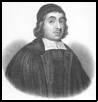
Showing posts with label Thomas Watson. Show all posts

Monday, July 9, 2012

Books that have Impacted My Christian Walk (Part 1 - Discipleship)

"Which books have most significantly impacted your life as a Christian?"  This question was posed to me a couple months ago and I was kindly granted an opportunity to share a few recommendations one Wednesday evening at Trinity Church (Montgomery, AL).

At first, a number of recently read titles came to mind.  However, I quickly recalled one book by ‎a Puritan author that I picked up and read during my undergraduate years which I have ‎always kept at arms length: Thomas Watson's The Godly ‎Man's Picture.  This book represents a primary area of study that I believe should be a ‎part of every Christian's reading diet, namely, Discipleship.

Let me begin by introducing this Puritan author author to you.  Thomas Watson was a Presbyterian minister during the 17th century who at one time was ‎imprisoned and nearly lost his head for sympathizing with the king over against ‎Cromwell.  Mercy was shown to him and he was released.

During his ministry Watson suffered many persecutions against nonconformists (or ‎Dissenters) by the hands of the ruling parties, yet he remained steadfast.  This particular ‎volume was written during a period of time when he, along with many other ministers ‎who opposed the Act of Uniformity, was ejected from his pulpit and restricted to live at ‎least five miles away from his old congregation. As C. H. Spurgeon wrote, "Bread eaten in ‎secret is proverbially sweet, and the word of God in persecution is peculiarly delightful."  This is a key fact worth remembering whenever you read any Puritan work.  Many of these pastors were writing and publishing books in order to minister to the congregations from which they had been exiled.  Their setting was one of great opposition.

I am not sure how this fact plays into the reception of the first edition of this work, but The Godly Man's Picture was published in 1666, the year of the Great Fire in London.‎  If nothing else, these words would be a great help to many who needed encouragement during a very trying time.

Of Watson, Spurgeon wrote:‎ "Watson was one of the most concise, racy, illustrative, and suggestive of ‎those eminent divines who made the Puritan age the Augustan period of ‎evangelical literature.  There is a happy union of sound doctrine, heart ‎searching experience and practical wisdom throughout all his works, and ‎his Body of Divinity is, beyond all the rest, useful to the student and the ‎minister.‎"

When one recommends the reading of the Puritans, a common reaction is the perception that they all are very difficult to read.  This is so in many cases, but Watson, I believe, is an exception.  A friend recently told me that one of the ladies in a church in which he previously ‎ministered was well acquainted with the works of Thomas Watson and had read through ‎his Body of Divinity (which is an explanation of the Westminster Shorter Catechism) at least twice with great profit.‎  Although Watson's Body of Divinity is arguably his best known work (or even his greatest ‎work), The Godly Man's Picture paved the way for it.  ‎

The full title of this work is The Godly Man's Picture: drawn with a scripture pencil, or, ‎some characteristic marks of a man who is going to heaven. ‎

Permit me now to introduce the various parts of this book and supply a selection of quotations to illustrate the readability and the richness of the content.  Rather than following the structure of the catechism, Watson unpacks twenty-four ‎characteristics of a godly person. Another way of stating this would be "the marks of ‎grace upon a Christian."  In this volume you will find practical Christianity, or radical ‎discipleship, explained from a perspective of free grace and evangelical zeal.‎

Watson begins this treatise on godliness by rooting the matter in the forgiveness of sins ‎found in God's free grace by Jesus Christ.  ‎
  • He defines godliness as "the sacred impression and workmanship of God in a man, ‎whereby from being carnal he is made spiritual" (12).  ‎
He, then, clears the way by reproving pretenders of godliness.‎
  • How many are painted only with the vermilion of profession, whose ‎seeming lustre dazzles the eyes of beholders, but within there is nothing but ‎putrefaction! (15)‎
  • He who has only a painted holiness shall have a painted happiness. (17)‎
Some of my favorite sections include: ‎
  • A Man Fired with Love to God
  • A Man Who Prizes Christ
  • A Man Who is an Evangelical Weeper
  • A Man Who Loves the Word
  • A Man of Prayer
  • A Heavenly Man
  • A Zealous Man
  • A Thankful Man
  • A Few Quotes
Some of the most memorable quotes include:
Fired with Love to God
Where is the man whose heart is dilated in love to God? Many court him, ‎but few love him. (31)‎
Many say they have Christ in high veneration, but they are not industrious ‎in the use of means to obtain him.  If Christ would drop as a ripe fig into ‎their mouth, they could be content to have him, but they will not put ‎themselves to too much trouble to get him.  Does he who will not take ‎medicine or exercise prize his health? (51)‎
He who sets a high value on Christ will part with his pride, unjust gain and ‎sinful fashions (Isa. 30:32).  He will set his feet on the neck of his sins.‎

A Zealous Man
When we are zealous in devotion, and our heart waxes hot within us, here ‎is a fire from heaven kindling our sacrifice.  How odious it is for a man to ‎be all fire when he is sinning, and all ice when he is praying! (115)‎

A Thankful Man
Many have tears in their eyes and complaints in their mouths, but few have ‎harps in their hand and are blessing and praising the name of God. (131)‎
That which may put another string into the instrument of our praise and ‎make it sound louder is to consider what spiritual blessings God has ‎conferred on us. He has given us water from the upper springs; he has ‎opened the wardrobe of heaven and fetched us out a better garment than ‎any of the angels wear. He has given us the best robe and put on us the ring ‎of faith, by which we are married to him. These are mercies of the first ‎magnitude, which deserve to have an asterisk put on them. And God keeps ‎the best wine till last. Here he gives us mercies only in small quantities; the ‎greatest things are laid up. Here there are some honey drops and foretastes ‎of God's love; the rivers of pleasure are reserved for paradise. Well may we ‎take harp and viol and triumph in God's praise. Who can tread on these ‎coals of God's love and his heart not burn in thankfulness? (136)‎

Thoroughly Trained in Religion
Evangelical obedience is true in its essence, though not perfect in its degree, ‎and where it comes short, Christ puts his mercies into the scales, and then ‎there is full weight. (174)‎

Conclusions
The Scripture speaks of the cedar and the bruised reed, the latter of which ‎is a true plant of the heavenly paradise as the other. So the weakest ought ‎not to be discouraged. Not all have these characteristics of godliness ‎written in capital letters. If they are only faintly stamped on their souls, God ‎can read the work of the Spirit there. Though the seal is only faintly set on ‎the wax, it ratifies the will and gives a real conveyance of an estate. If there ‎is found just some good thing towards the Lord (as it was said of Abijah), ‎God will accept it (I Kings 14:13). (190)‎

To conclude this book, Watson adds six final chapters including encouragements, ‎exhortations, counsel and comfort, capped off with a delightful discourse on the spiritual ‎union between Christ and believers.  Another highlight of this final section is the chapter ‎on Comfort to the Godly in which Watson exposits Matthew 12:20, ‎‎"A bruised reed shall he not break and smoking flax shall he not quench, ‎till he send forth judgment unto victory."‎

Supplemental Reading
As I mentioned above, The Godly Man's Picture represents to me an excellent introduction into the study of discipleship.  There are many other books worth recommending under this heading, however, permit me to suggest a few others.  Two books that I recently read and used in a Sunday School setting are Eugene Peterson's A Long Obedience in the Same Direction and Eric Routley's Ascent to the Cross. These are ‎studies through the Pilgrim Psalms with an eye toward the theme of discipleship.

I have also been studying through the Gospel of Mark which has a dual theme of discipleship and christology.  I would recommend James Edwards's commentary The Gospel According to Mark in the Pillar New Testament series.  Edwards does an excellent job of exposition and offers a very readable text.  Although a knowledge of Greek will assist the reader, it is not necessary at all in order to read through this commentary.  This is not a devotional commentary by any means, but it would be well worth the effort to be used devotionally.

A classic work that I read a couple of years ago is Dietrich Bonhoeffer's The Cost of Discipleship. You don't have to agree with all that Bonhoeffer represented in his theological connections to appreciate this excellent study.

An even great classic is John Bunyan's The Pilgrim's Progress.

Finally, I want to recommend to you Paul David Tripp's Broken-Down House: Living Productively in a World Gone Bad.  This is an excellent intermingling of worldview and discipleship.  This revolutionized my understanding of my calling in God's world.  I read through it, reviewed it and then discussed it with a small group.  We all came away from this study having been greatly helped.

I recommend all of these to you!

Related:
Read the introductory post to this series: Thoughts on Christian Reading
Part 2 - When You Pass Through the Fire
Part 3 - Learning to Pray

Share/Bookmark

Friday, June 15, 2012

How to Get the Most from Reading your Bible - Thomas Watson

by Thomas Watson 
Abridged and Modernized by Matthew Vogan (reformatted and corrected by Jason Button)

1.     Remove hindrances
·         remove the love of every sin 
·         remove the distracting concerns of this world, especially covetousness (Matt. 13:22) 
·         Don't make jokes with and out of Scripture.
2.     Prepare your heart. (1 Sam. 7:3) 
Do this by: 
·         collecting your thoughts 
·         purging unclean affections and desires 
·         not coming to it rashly or carelessly.
3.     Read it with reverence, considering that each line is God speaking directly to you.
4.     Read the books of the Bible in order.
5.     Get a true understanding of Scripture. (Ps. 119:73)
·         This is best achieved by comparing relevant parts of Scripture with each other.
6.     Read with seriousness. (Deut. 32:47)
·         The Christian life is to be taken seriously since it requires striving (Lk. 13:24) and not falling short (Heb. 4:1).
7.     Persevere in remembering what you read. (Ps. 119:52)
·         Don't let it be stolen from you (Matt. 13:4, 19). If it doesn't stay in your memory it is unlikely to be much benefit to you.
8.     Meditate on what you read. (Ps. 119:15)
·         The Hebrew word for meditate means ‘to be intense in the mind’. Meditation without reading is wrong and bound to err; reading without meditation is barren and fruitless. It means to stir the affections, to be warmed by the fire of meditation (Ps. 39:3).
9.     Read with a humble heart.
·         Acknowledge that you are unworthy that God should reveal himself to you. (Jas. 4:6)
10.   Believe it all to be God's Holy Word. (2 Tim. 3:16)
·         We know that no sinner could have written it because of the way it describes sin. No saint could blaspheme God by pretending his own Word was God's. No angel could have written it for the same reason. (Heb. 4:2)
11.   Prize the Bible highly. (Ps. 119:72)
·         It is your lifeline: you were born by it (Jas. 1:18); you need to grow by it (1 Pet. 2:2) (cf. Job 23:12).
12.   Love the Bible ardently (Ps. 119:159).
13.   Come to read it with an honest heart. (Luke 8:15)
·         Willing to know the entire and complete will of God
·         reading in order to be changed and made better by it (Jn. 17:17).
14.   Apply to yourself everything that you read, take every word as spoken to yourself:
·         Its condemnation of sins as the condemnation of your own sin
·         the duty that it requires as the duty God would require from you (2 Kgs. 22:11).
15.   Pay close attention to the commands of the Word as much as the promises.
·         Think of how you need direction just as much as you need comfort.
16.   Don't get carried away with the minor details, rather make sure to pay closest attention to the great things (Hos. 8:12).
17.   Compare yourself with the Word.
·         How do you compare?
·         Is your heart something of a transcript of it, or not?
18.   Pay special attention to those passages that speak to your individual, particular and present situation. e.g. 
·         Affliction — (Heb. 12:7; Isa. 27:9; Jn. 16:20; 2 Cor. 4:17. 
·         Sense of Christ's presence and smile withdrawn — (Isa. 54:8; 57:16; Ps. 97:11) 
·         Sin — (Gal. 5:24; Jas. 1:15; 1 Pt. 2:11; Prov. 7:10, 22-23; 22:14) 
·         Unbelief — (Isa. 26:3; 2 Sam. 22:31; Jn. 3:15, 36; 1 Jn. 5:10)
19.   Pay special attention to the examples and lives of people in the Bible as living sermons
·         Punishments (Nebuchadnezzar; Herod; Num. 25:3-4, 9; 1 Kgs. 14:9-10; Ac. 5:5,10; 1 Cor. 10:11; Jd. 7) 
·         mercies and deliverances (Daniel, Jeremiah, the 3 youths in the fiery furnace)
20.   Don't stop reading the Bible until you find your heart warmed. (Ps. 119:93)
·         Let it not only inform you but also inflame you (Jer. 23:29; Lk. 24:32).
21.   Put into practice what you read. (Ps. 119:66, 105; Deut. 17:19)
22.   Christ is for us Prophet, Priest and King.
·         Make use of His office as a Prophet (Rev. 5:5; John 8:12; Ps. 119:102-103). Get Christ not only to open the Scriptures up to you, but to open up your mind and understanding (Lk. 24:45).
23.   Make sure to put yourself under a true ministry of the Word, faithfully and thoroughly expounding the Word. (Prov. 8:34)
·         Be earnest and eager in waiting on it.
24.   Pray that you will profit from reading. (Isa. 48:17; Ps. 119:18; Neh. 9:20).

Natural obstacles 
You may still be able to profit from reading even though:
  1. You don't seem to profit as much as others do.
    • Remember the different yields (Matt. 13:8) though the yield isn't as much as others it is still a true and fruitful yield.
  2. You may feel slow of understanding (Lk. 9:45, Heb. 5:11).
  3. Your memory is bad 
    • remember you are still able to have a good heart despite this 
    • you may still remember the most important things even if you cannot remember everything, be encouraged by John 14:26. 

Share/Bookmark

Sunday, May 3, 2009

Quick & Helpful Sources on Prayer

Very few books are too short, and most are too long! Maybe this is an over-exaggeration, but it tends to be the case with books dealing with the spiritual disciplines. Books on prayer ought to be only as long as is necessary to inform and motivate without being so long that there is no time left to pray. This makes sense to me!

Well, if you are looking for a simple, straightforward and motivational place to begin reading on the topic of prayer, I recommend chapters 7 (Discipline of Devotion) and 8 (Discipline of Prayer) of R. Kent Hughes' Disciplines of a Godly Man. Although this books is geared specifically toward men, these two chapters are equally applicable to women.

Why pray? Hughes answers this important question very simply offering two reasons:
  1. Because of what prayer does to our character.
  2. Because prayer bends our wills to God's will.
I found his explanation of the first point to be very helpful. He writes, "Prayer is like a time exposure to God.... The more we expose our lives to the white-hot sun of His righteous life..., the more His image will be burned into our character -- His love, His compassion, His truth, His integrity, His humility" (p. 83).

In chapter 8, Hughes identifies and briefly explains five aspects of prayer:
  1. In-spirited Prayer
  2. Continual Prayer
  3. Varied Prayer
  4. Persistent Prayer
  5. Intercessory Prayer
Another source that is quick, helpful and a favorite of mine, is Thomas Watson's The Godly Man's Picture. Section 12 identifies the godly man as a praying man (pp. 87-96).
A Christian is better after prayer. He has gained more strength over sin, as a man by exercise gets strength. The heart after prayer keeps a tincture of holiness, as the vessel favours and relishes the wine that is put into it. Having been with God on the mount, Moses' face shone. So, having been on the mount of prayer, our graces shine and our lives shine. This is the right kind of praying. The gift of prayer is ordinary, like culinary fire. But spiritual prayer is more rare and excellent, like elemental fire which comes from heaven. (93)
Finally, you may consider reading John Bunyan's treatise On Praying in the Spirit (found in volume one of The Works of John Bunyan. This has also been published in the Puritan Paperbacks series by the Banner of Truth: Prayer by John Bunyan.

Bunyan begins with What Prayer Is, and offers a classic definition:
Prayer is a sincere, sensible, affectionate pouring out of the heart or soul to God, through Christ, in the strength and assistance of the Holy Spirit, for such things as God hath promised, or according to the Word, for the good of the church, with submission, in faith, to the will of God.

Share/Bookmark

Sunday, July 1, 2007

Westminster Assembly Convenes

On July 1, 1643 the Westminster Assembly convened for the first time in the Henry VII Chapel of Westminster Abbey in London. According to Wikipedia the Assembly “was appointed by the Long Parliament to restructure the Church of England.” It consisted of 10 Lords, 20 Commoners, and 121 “Divines” of the Anglican Church. Some of these men were from the Puritan wing of the Church, who wanted to carry on the work of the Reformation in the Church and purify it from the remnants of Catholicism. The Assembly also called on the Scottish Presbyterians, who sent 6 representatives including George Gillespie, Robert Baillie, and Samuel Rutherford.

Though never able to agree on a form of church government, the Assembly produced some important and influential documents: the Longer and Shorter catechisms and the Westminster Confession of Faith. These documents have been accepted by many and adapted by others as standards for faith and practice. The Anglicans adopted these documents only after revisions, but “they formed the cornerstone of the Presbyterian Church and other reformed churches as they established themselves throughout Europe and America” (Wikipedia).

The work of the Westminster Divines represents men of different persuasions trying to hammer out a scriptural position during times of trouble. England was locked in civil war during the 1640s between Parliament and those loyal to King Charles I. War ended with the king being executed, his son Charles II exiled, and the monarchy abolished. The few years of relative peace and religious tolerance following saw many Puritan books produced, many of which are reprinted today. When Charles II and his supporters restored the monarchy in 1660, religious persecution was the order of the day; and men like Rutherford, Thomas Watson, and others were marked men. Their ministries were limited and difficult. Yet the work they did in the 1640s remained, and still does.

The catechisms and the Confession are in print today, along with expositions based on them. A good exposition of the Westminster Shorter Catechism is Thomas Watson’s A Body of Divinity published by Banner of Truth. Whether or not you read these documents, it’s likely that your statement of faith was at least influenced by them. Today is a good opportunity to be thankful to the Lord for using men in all ages to meticulously study and clearly express the great doctrines of the faith.


Share/Bookmark

Friday, May 11, 2007

"Holy Violence"

According to Thomas Watson, “holy violence” is what a believer needs to offer to himself in his pursuit after glory. In his book, Heaven Taken by Storm, the puritan preacher expounds Matthew 11:12, “And from the days of John the Baptist until now the kingdom of heaven suffereth violence, and the violent take it by force.” He pictures the Christian life as a conquest of Heaven, which must be pressed into because of enemies that stand in our way. On his first missionary journey the apostle Paul told believers, “We must through much tribulation enter into the kingdom of God” (Acts 14:22). This was after Paul had been stoned and left for dead. Difficulties should not deter the true believer from his pursuit. Watson knew this concept in his own personal experience. He was one of the 2000 ministers ejected from his pulpit for nonconformity in 1662. Heaven Taken by Storm was published in 1669 after years of deprivation and persecution.

But external enemies are not the believer’s only hindrance. We have an enemy within called “the flesh” that seeks to turn us toward sin and away from glory. Concerning this traitor within Watson says, “There needs no wind to blow to sin when this tide within is so strong to carry us thither.” Going against this current within is like the salmon swimming upstream. Only we put forth this effort, not to die like the salmon, but to live eternally. As the writer to the Hebrews indicates, “striving against sin” is called for in the life of faith (Heb. 12:4). This line of biblical truth is notoriously “missing in action” in many of today’s books and sermons. Watson’s wise counsel is still timely after more than three hundred years: “The exercises of the worship of God are contrary to nature; therefore there must be a provoking of ourselves to them. The movement of the soul towards sin is natural, but its movement towards heaven is violent.”

I heartily recommend this worthy volume by Thomas Watson. It was reprinted in 1992 by Soli Deo Gloria Publications, but it seems to be out of print now. However, used copies are available through online resources like Amazon and AbeBooks. A digital copy of the book is available here.
Share/Bookmark

Saturday, February 24, 2007

Thomas Watson, The Great Gain of Godliness (BOT, 2006)

Thomas Watson's The Great Gain of GodlinessThe Great Gain of Godliness: Practical Notes on Malachi 3:16-18 by Thomas Watson. Puritan Paperbacks. Edinburgh: The Banner of Truth Trust, 2006. 166 pp. $10.00/paperback.

Purchase -
BOT, CBD, WTS, Amazon, Monergism

Note - This book was originally published in London as Religion Our True Interest, 1682.

no indices

ISBNs: 0851519385, 9780851519388
LCCN: BT75.W337
DCN: 224.997.3 W337

Front Cover Table of Contents Excerpt Back Cover

Reviewed by: Jason Button, SI Book Review Editor [This review has aslo been posted on SharperIron: here]

Thomas Watson (1620-1686) was an English, non-conformist minister. He was educated at Emmanuel College, Cambridge, and he served as rector of St. Stephen's Walbrook, London, from 1646 to 1662 when he was ejected from his pulpit for religious nonconformity. After this, he took up further ministry preaching in Crosby Hall until 1672. As a preacher he was greatly admired, and he remains, as Spurgeon noted, “…one of the clearest and liveliest of Puritan authors.”

Thomas Watson has been my favorite Puritan writer ever since I purchased and began reading The Godly Man’s Picture. For those looking for a heart-searching book on the topic of godliness, I have recommended first and foremost this little book. However, “godliness” is a topic that permeates the writings of Thomas Watson, and, now, The Banner of Truth Trust (BOT) has reprinted another of his works which they have appropriately re-titled, The Great Gain of Godliness. But, lest you fear that Watson has done what many modern writers do by repackaging the very same material in each new book, be assured that this work is a fresh exposition upon the subject.

C. H. Spurgeon’s library lacked this book (at least up until the time of the publication of his Commenting and Commentaries) to his regret. About this book, he wrote, “This would be a great find if we could only come at it, for Watson is one of the clearest and liveliest of Puritan authors. We fear we shall never see this commentary, for we have tried to obtain it, and tried in vain.”

What Watson has in store for you in this little book is an exposition of Malachi 3:1-18 written for both laymen and churchmen alike. In true Puritan style, Watson gives to us an extended, theological, and thoroughly experimental commentary with the dual purpose of encouraging “solid piety” and confuting “the atheists of the world, who imagine there is no gain in godliness” (p. vii). Working with this admission, the BOT editor chose the current title for this book.

Watson organizes the study of this text of Scripture under two main heads. First, he deals with “The Character of the Godly.” Second, he displays “The Good Effects of Their Piety.”

The simplicity of this organization, and the addition of an outline in chapter one, aids the reader tremendously. Also, it is noteworthy, that the publisher has done well with breaking up the material in manageable and coherent segments. However, although it is understood that creating indices is a time-consuming task, these Puritan Paperbacks would be much improved if, at the least, a Scripture index was added.

The first major point, regarding the character of the godly, is essentially a biblical theology of the fear of God. Watson defines what this fear is not, and then what it is. Divine fear “is the reverencing and adoring of God’s holiness, and the setting of ourselves always under his sacred inspection…. Such as approach God’s presence with light feathery hearts, and worship him in a rude, careless manner, have none of this fear” (p. 13). From this foundation, Watson delineates six uses of the proposition that Christians must be fearers of God. These uses include refutation, instruction, lamentation, reproof, exhortation, and self-examination.

Not only do the godly fear God, but they also speak of God. Chapter seven, “The Godly Should Speak of God,” is a heart-probing biblical theology of the tongue. From reproof of those who are silent and of those who speak wrongfully, Watson moves on to exhort Christians to speak of God. He writes,

He who has been in a perfumer’s shop does not only himself partake of those sweet smells, but some of the perfume sticks to his clothes, so that those who come near him partake of those perfumes: so having ourselves perceived the sweet savour of Christ’s ointments, we should let others partake with us, and by our heavenly discourse, diffuse the perfume of religion to them. (p. 68)

Finally, in chapter eight, Watson finishes out Part 1 with a biblical theology of meditating on the name of God. Our thoughts are with us everywhere we go, so we must guard them and direct them in a godly way. Of the many sharp statement to be found in this section here are a few that should ring in all of our ears for a long time.

If only men carefully considered God’s holiness and justice, would they dare sin at the rate they do? (p. 86)
The higher the lark flies, the sweeter it sings; the higher a soul ascends in the thoughts of God, the sweeter joy it has. (p. 88)
The mind seasoned with good thoughts in the morning will keep the heart in a better state all the day after. (p. 92)

Part 2 takes us from the character of the godly to the good effect of godliness. From the saints thoughts of God, the passage turns to God’s regard for the saints—“and the LORD hearkened and heard.” Watson shows from Scripture how that God regards the piety of His people.

Oh, the love of God, that he should have respect to our offerings that are interlaced with sin! Our best duties are sweet wine coming out of a sour cask. (p. 100)

Chapter ten, “God Records the Piety of His People,” was, for me, the highlight of this book. In similar fashion as with the aforementioned subjects, Watson draws out a thorough and pastoral theology of God’s record-keeping. So, what does God remember? What does he write in His book? He writes down the names, good speeches, tears, thoughts, desires, prayers, alms, and sufferings of his saints.

Oh, the heavenly indulgence and kindness of God to his people! He remembers everything but their sins. He writes down their good thoughts and speeches in a merciful book of remembrance; but their sins are as if they had never been; they are carried into the land of oblivion. (p. 108)

Once again, Watson returns to the thoughts of the saints. “A Christian should keep two books always beside him;” Watson exhorts, “one to write his sins in, that he may be humble; the other to write his mercies in, that he may be thankful” (p. 108).

Without giving everything away, I will note that Watson concludes the book with four chapters searching out the ways in which God rewards His people and a final chapter on verse 18 regarding the means of discerning between the righteous and the wicked.

Chapter sixteen is an appended sermon on Psalm 119:65—A Consolation in Affliction. This is an excellent example of Puritan, experimental preaching.

Thomas Watson’s The Great Gain of Godliness, is a work that speaks as effectively today as it did in the close of the seventeenth century. Godliness is to be the watchword of all saints. Unfortunately, it, along with holiness and piety, are terms that many want to render outdated. If there is anything our churches desperately need, it is a resolve to “keep up the vigour of our zeal in degenerate times” (p. 7). As Watson wrote at the outset of this exposition,

“Let us be as lilies and roses among the briars. Sin is never the better because it is in fashion, nor will this plea hold at the last day, that we did as the most. God will say, Seeing you sinned with the multitude, you shall go to hell with the multitude. Oh, let us keep pure among the dregs; let us be like fish that retain their freshness in salt waters; and as the lamp which shone in the smoking furnace (Gen. 15:17)” (p. 7).

Many of the statements I have shared above, and more, have been on my mind over the past few weeks as I have been reading this book and writing this review. Many Christians have ignored the Puritans out of ignorance and/or fear to their own loss. Some have only come in contact with those Puritans who are more difficult to read and have become discouraged about reading any more of them. I would urge you to pick up and read this book. Watson’s style is clear, crisp, and illustrious. He was not only a student of the Word, but he was also well versed in classical literature and history. These abilities, along with the Holy Spirit as his Helper, have made him an able minister of the Gospel of Jesus Christ and of the doctrines of grace. I heartily recommend this book to all. You will be brought to your knees.


Share/Bookmark

Sunday, October 29, 2006

The Pursuit of Godliness: Forgiveness

Devotional thoughts on Thomas Watson’s The Godly Man’s Picture (part the second)

"Guilt clips the wings of prayer so that it cannot fly to the throne of grace, but forgiveness breeds confidence." [Thomas Watson (1620-1686), The Godly Man’s Picture, 1666, reprinted by Banner of Truth, 1992, p. 11.]

Godliness is the evidence of God in a person's life. Having created man for His own glory, God desires communion with man. However, since Adam's sin that communion has been severed. There has been an effective break in the relationship between man and his creator. In other words, there has been an awful divorce, and God hates divorce (Mal 2:16). He desires reconciliation (2 Cor. 5:20). This is the way to godliness; this is where godliness begins. To be reconciled to God is to be fogiven of the sins that have effected the great divorce. Paul shows us the way of reconciliation by stating that, "For our sake he made him to be sin who knew no sin, so that in him we might become the righteousness of God" (2 Cor. 5:21). Forgiveness of sins comes through Jesus Christ alone.

True hapiness comes not in the temporal things the world has to offer us, but in reconciliation with our Creator-Redeemer-God. Watson turns our attention to this mighty truth in the first chapter of this book. "For this shall every one that is godly pray unto thee" (Psa. 32:6). Watson says, "This is an incomprehensible blessing, and such as lays a foundation for all other mercies."

From here, he follows this outline in showing the genesis of godliness.
  1. Forgiveness of sin is an act of God's free grace
  2. God, in forgiving sin, remits the guilt and penalty
  3. Forgiveness of sin is through the blood of Christ
  4. Before sin is forgiven, it must be repented of
  5. God having forgiven sin, he will no longer call it to rememberance (Jer. 31:34)
  6. How sad it is to lack it!
  7. How sweet it is to have it!

Sinner, do you know the experience of prayers hindered by guilt? Are you seeking to approach God on your own terms, without humility and repentance. "All the curses of God," writes Watson, "stand in full force against the unpardoned sinner." Seek forgiveness and the heavens will open to you.

Christian, do you know the experience of having the wings of your prayers clipped by guilt? In the same way you came to Christ the first time, you must come again. Humble yourself in repentance. To refuse to repent is arrogance, "but forgiveness breeds confidence."


Share/Bookmark

Saturday, October 21, 2006

The Pursuit of Godliness

Devotional thoughts on Thomas Watson’s The Godly Man’s Picture

“Policy without piety is profound madness.” [Thomas Watson (1620-1686), The Godly Man’s Picture, 1666, reprinted by Banner of Truth, 1992]

I read these words this past week as I began to reread Thomas Watson’s wonderful little book entitled The Godly Man’s Picture. I’m afraid to say how hard these words hit me.

The idea of policy without piety is that of a sham, a hoax, a fraud. It is the epitome of hypocrisy and insincerity. Policy without piety is equal to doctrine without duty, learning without religion, knowledge without practice, and assent without devotion.

James passionately pleads with his indifferent readers to consider the validity of their profession apart from any apparent evidence. He queries, “What good is it, my brothers, if someone says he has faith but does not have works? Can that faith save him?” (Js. 2:14) Just as food that fails to sustain the body, or knowledge that is never applied, or a promise that is never fulfilled is worthless, so profession without apparent evidence is empty.

The Preacher exhorts us along the same lines in the conclusion of Ecclesiastes,

The words of the wise are like goads, and like nails firmly fixed are the collected sayings; they are given by one Shepherd. My son, beware of anything beyond these. Of making many books there is no end, and much study is a weariness of the flesh.

The end of the matter; all has been heard. Fear God and keep his commandments, for this is the whole duty of man. For God will bring every deed into judgment, with every secret thing, whether good or evil. (12:11-14)

Words of wisdom are beneficial. They are like goads to correct and firmly fixed nails to support because they are from God, the one Shepherd. Intellectual pursuits beyond the wisdom of God are nothing more than weariness and distraction from what is most important—truly beneficial. In the end, he states, intellectualism divorced from true piety is contrary to “the end of the matter”. The end of the matter is duty not mere intellectualism. The body of Ecclesiastes has shown that theory and practice are at odds with one another, and as G.S. Hendry, in his commentary on Ecclesiastes, wrote, “Theory and practice will remain at variance so long as we are under the sun. The reconciliation, the resolution of the discord awaits the time when faith will give place to sight and every hidden thing will be revealed.” (The New Bible Commentary: Revised. Guideposts: Carmel, NY. 1970, p. 578)

We see then that the Christian’s pursuit of maintaining consistency between policy and piety is a life long exercise. With that it is a duty we are enjoined to pursue with all of our energy although it is a challenge. To fail to do so is to resort to a life of futility, emptiness, and, as Watson put it, “profound madness.” But we are not left to despair, because we can hold to the same confidence as that of the apostle Paul, who writing from prison, testified that “I can do all things through him who strengthens me.” (Phil. 4:13) Herein is the source of Paul’s joy and strength—him. That is Jesus Christ the Lord. Paul was by nature a zealous man. With great zeal he pursued the faith of his forefathers and with equal zeal he sought to uproot and destroy the Christian faith throughout the world. But then Jesus confronted him and showed him how that his policy was flawed and in direct opposition to God Almighty. Paul learned first that flawed policy with piety is "profound madness". From that moment of conversion Paul set out on a new course and pursued it in the strength of Christ with the same amount of zeal. He agonized and suffered many trials throughout his life maintaining a proper unity between right policy and piety. He devoted himself wholeheartedly to the right policy. His life’s motto was “For to me to live is Christ, and to die is gain.” (Phil. 1:21)

Paul’s writings are not only full of his example of maintaining unity between policy and piety, but they are also full of instruction along the lines of Watson’s statement, “Policy without piety is profound madness.”

In Philippians alone we read the following:
Only let your manner of life be worthy of the gospel of Christ. (1:27)
Do all things without grumbling or questioning, that you may be blameless and innocent, children of God without blemish in the midst of a crooked and twistedgeneration, among whom you shine as lights in the world, holding fast to the word of life, so that in the day of Christ I may be proud that I did not run in vain or labor in vain. (2:14-16)

Brothers, join in imitating me, and keep your eyes on those who walk according to the example you have in us. (3:17)

Do not be anxious about anything but in everything by prayer and supplication with thanksgiving let your requests be made known unto God. (4:6)

Finally, brothers, whatever is true, whatever is honorable, whatever is just, whatever is pure, whatever is lovely, whatever is commendable, if there is any praise, think about these things. What you have learned and received and heard and seen in me—practice these things, and the God of peace will be with you. (4:8-9)

The fact that Paul exhorts his believing readers to conjoin duty to doctrine reminds us of fact that this is something that doesn’t come naturally. It is something that the church needs to be reminded of often. I am reminded of the early church of whom it is said that “they devoted themselves to the apostles’ teaching and fellowship, to the breaking of bread and the prayers…. And all who believed were together and had all things in common.” (Acts 2:42, 44) Not only were they eager to learn more from the apostles, but what they had received and learned from them they immediately put into practice. This had such a profound affect upon their communities that many more came to faith in Jesus Christ and persecution from those who were hardhearted sharply increased.

Especially in the midst of the severe persecution the early church endured, it would have been “profound madness” to profess the name of Christ, but remain indifferent to Him. They would have risked there lives for something to which they were not devoted in the least.

What about me, you, us? Those of us in America know very little, if anything, about persecution. For us it is very easy to profess Christ and remain indifferent. It seems that this is a key element to many local mega-churches. The name of Jesus is everywhere even on their lips in vain as swear words. To many, it seems that Christianity is an additive. The gospel is reduced to “try Jesus.” This is, without a doubt, “profound madness.” This is not the gospel! This is a hoax, a shame, a fraud.

And how easy is it for you and me to fall into this same trap. We see it all around us, and we hear it on the “Christian” radio and TV stations. The world wants us to be more like them. They hate the truth especially when it causes distinctions and divisions. They are demanding that Christian policy be rewritten because they will not accept devotion to the truth. And we at times give in. We (I) buckle out of fear. Fear of ridicule. Fear of seeming odd.

God forgive me! God forgive us! If I need anything it is the constant reminder of my calling to pursue godliness. I need to be reminded of the great storehouse of grace that was opened to me when God forgave me and saved me. I need a renewed vision of the godly life. I need to meditate upon the affects godliness will have upon all of my relationships and responsibilities.

Watson expresses his desire for those who read The Godly Man’s Picture in his letter “To the Reader.” His desire, consistent with Paul, is that all “may be so enamoured with piety as to embrace it heartily.” “Godliness,” Watson writes, “consists in an exact harmony between holy principles and practices…. Godliness is our wisdom.”

In order to fulfill his desire for his readers, Watson undertakes the task of painting a portrait of the godly man. He begins the portrait by addressing the problem of sin and the need of forgiveness without which piety can never exist.

“For this shall every one that is godly pray unto thee” (Psa. 32:6) is the subject of his first chapter.
Second, he expounds the Nature of Godliness.
Third, he reproves such as are only Pretenders to Godliness.
Fourth, he shows the Characteristics of a Godly Man.
A Man of Knowledge
A Man Moved by Faith
A Man Fired with Love
A Man Like God
A Man Careful About the Worship of God
A Man Who Serves God not Men
A Man Who Prizes Christ
A Man Who Weeps
A Man Who Loves the Word
A Man Who has the Spirit of God Residing in Him
A Man of Humility
A Man of Prayer
A Man of Sincerity
A Heavenly Man
A Zealous Man
A Patient Man
A Thankful Man
A Man Who Loves the Saints
A Man Who Does Not Indulge Himself in Any Sin
A Man Who is Good in His Relationships
A Man Who Does Spiritual Things in a Spiritual Manner
A Man Thoroughly Trained in Religion
A Man Who Walks with God
A man Who Strives to Be an Instrument for Making Others Godly
Fifth, he draws Two Conclusions about the Characteristics of a Godly Man
Sixth, he sets forth six specific Exhortations to Godliness
(i) Let men seriously weigh their misery while they remain in a state of ungodliness
(ii) What rare persons the godly are
(iii) To strive for godliness is most rational
(iv) The excellence of godliness
(v) There are only a few godly
(vi) Consider how vain and contemptible other things are, about which persons void of godliness busy themselves
Seventh, he prescribes some Helps to Godliness
Eighth, he lays forth an exhortation to Persevere in Godliness
Ninth, he draws forth motives to Persevere in Godliness
Tenth, he provides Counsel for the Godly
Eleventh, he assures that there is Comfort for the Godly
Finally, he shows the Mystic Union between Christ and the Saints

In his own words Watson admits that “so sublime is godliness that it cannot be delineated in its perfect radiance and luster, though an angel should take the pencil.” He concludes his letter to the reader by clarifying his method in drawing out this portrait. He explains, “Should I have enlarged upon any one characteristic of the godly man, it would have required a volume, but designing to go over many, I have contracted my sails, and given you only a brief summary of things.”

Watson’s style is straightforward and power packed. Every sentence is well thought out, concise and meaty. This is a delightful work to read and sure to be profitable to any soul zealous for godliness.

In the weeks to come I will attempt to take sections of this book at a time and expand upon them as we have done above. I would be grateful for humble interaction on these topics.


Share/Bookmark

Wednesday, October 11, 2006

A Favorite Devotional Work


Godly Man's Picture

By Thomas Watson / Banner Of Truth (PB, 256 pages)

The Godly Man's Picture, "written by a preacher in the Puritan era, shows how attractive the grace of God is. Christians of all stages will feel as if they have entered the gallery of a great portrait painter."

I have personally benefited from reading and re-reading this tiny volume. Watson's language is vivid and full of Scripture. He is one of the easiest to read of the Puritan writers. -JB
--------------------------------

I would like to provide some links to stores where this title may be purchased:

Cumberland Valley Bible Books Store - $5.59 (LP $7.99)
Christian Book Distributors - $7.49
Amazon.com - $7.99 (free shipping)


Share/Bookmark